编者按:2025年11月2日,国际知名血液学专家Michael R. Bishop教授与Edmund K. Waller教授莅临北京大学血液病研究所进行学术交流。本次交流活动涵盖病房参访、专题报告及深度研讨等多个环节,双方围绕细胞治疗在血液肿瘤领域的最新进展、临床转化路径及未来发展方向进行了广泛交流。期间,美国埃默里大学医学院Edmund K. Waller教授以《阻断VIP信号通路用于癌症免疫治疗(Intercepting VIP signaling for cancer immunotherapy)》为题作专题讲座,系统分享了其团队在VIP 信号通路调控与CAR-T细胞治疗创新领域的突破性研究。为进一步传递学术前沿动态,《肿瘤瞭望 - 血液时讯》特别邀请Edmund K. Waller教授接受专访,就讲座内容展开深度解读,并畅谈了本次参访过程中对中国造血干细胞移植及CAR-T细胞治疗领域现状、挑战与国际合作潜力的独到见解。
《肿瘤瞭望-血液时讯》:基于您提出的“VIP受体拮抗剂嵌合CAR-T细胞”策略,哪些患者群体可能从这种改造后的CAR-T细胞治疗中获益最大?在将改造后的CAR-T细胞从实验室研究推向临床应用的过程中,您认为需要重点优化哪些环节以确保实现最佳疗效?
Edmund K. Waller教授:我们认为,通过针对癌症逃避免疫监视的核心机制进行干预,CAR-T细胞的治疗效果可获得显著优化。我们团队的一项重要研究发现,癌细胞会分泌一种名为血管活性肠肽(VIP)的小分子免疫抑制肽,该物质可抑制T细胞的活化过程,并削弱其对癌细胞的杀伤能力。
基于这一机制,我们认为两种临床场景尤为适宜用于评估一类新型CAR-T细胞的疗效,此类CAR-T细胞可分泌VIP受体拮抗剂,对应的优势获益患者群体包括VIP高表达的胰腺癌患者以及能够合成VIP的慢性淋巴细胞白血病患者。在上述两种疾病中,肿瘤组织均会构建免疫抑制性微环境,进而抑制T细胞的活化功能。我们推测,若使CAR-T细胞分泌针对该免疫抑制微环境的“解药”,可增强T细胞浸润肿瘤微环境、识别并清除癌细胞的能力。
目前,我们正加速推进相关疗法的美国食品药品监督管理局(FDA)新药上市申请,以期尽早将该治疗方案应用于临床患者。
Based on Intercepting VIP signaling strategy, which patient populations are most likely to benefit from this modified CAR-T therapy? In the process of translating modified CAR-T cells from bench research to clinical application, which key aspects do you believe require optimization to ensure optimal therapeutic outcomes?
We believe that CAR-T cells can be substantially improved by addressing some of the fundamental ways that cancer evades immune surveillance. One of our exciting observations is that cancer cells secrete a small immunosuppressive peptide called VIP, or vasoactive intestinal peptide. This limits the ability of T cells to become activated and impairs their ability to kill CAR-T cells. We believe two clinical scenarios are particularly suitable for testing a novel type of CAR-T cell that secretes a VIP receptor antagonist. The two patient populations are pancreatic cancer patients with high VIP expression and chronic lymphocytic leukemia patients who also synthesize VIP. In both cases, tumors create an immunosuppressive microenvironment that inhibits T cell activation. We believe that engineering CAR-T cells to secrete an antidote to this immunosuppressive factor will enhance T cells' ability to enter the tumor microenvironment, attack and eliminate cancer cells. We are working to advance the FDA-approved New Drug Application (NDA) as quickly as possible to make this therapy available to patients.
《肿瘤瞭望-血液时讯》:在VIP信号通路阻断与CAR-T细胞改造的交叉领域,您的团队未来计划开展哪些前沿探索?
Edmund K. Waller教授:我们已明确VIP为一种免疫抑制性免疫检查点,并针对性开发了新型靶向药物,可有效逆转癌症引发的免疫抑制状态。我们研发的长效拮抗肽半衰期超过1周,采用每周1次皮下注射的给药方式即可发挥免疫抑制逆转作用,目前该药物正计划推进至Ⅰ期临床试验阶段,以进一步验证其临床应用潜力。
除开发肠外给药制剂外,我们还通过基因工程技术改造CAR-T细胞,使其可自主分泌该肽类药物——通过向CAR-T细胞中导入该肽类药物的DNA编码序列,修饰后的CAR-T细胞能够在肿瘤局部微环境中持续产生并分泌该药物,进而显著提升其抗肿瘤效力与治疗效果。基于上述研究基础,我们认为这类修饰后的CAR-T细胞可用于胰腺癌患者的Ⅰ期临床试验,以评估其安全性与初步疗效。
In the field of VIP signaling pathway blockade and CAR-T cell modification, what cutting-edge research directions does your team plan to pursue?
So we've helped identify VIP or vasoactive intestinal peptide as an immunosuppressive immune checkpoint. We've developed novel drugs that can target this checkpoint and reverse cancer-induced immunosuppression. We have a long-acting form of an antagonistic peptide with a half-life of greater than a week that can be given subcutaneously weekly to reverse cancer-induced immunosuppression. And we're hoping to move this into phase one clinical trials in patients. In addition to developing a drug that could be given parenterally to patients, we've engineered CAR-T cells to secrete the drug themselves by including the DNA coding sequence for the peptide drug. The CAR-T cells will produce and secrete this drug into the local microenvironment, thereby gaining greater potency and efficacy. And we think that these CAR-T cells can be tested in a phase one clinical trial in pancreatic cancer patients.
《肿瘤瞭望-血液时讯》:在您参访北京大学人民医院期间,您对中国造血干细胞移植及CAR-T治疗现状的感悟是什么,包括进展、挑战以及与国际研究的潜在合作?
Edmund K. Waller教授:非常荣幸访问黄晓军教授在北京的团队,黄教授一直是中国单倍体造血干细胞移植领域的领军者。过去20年间,其主导的项目已发展至每年完成千逾例异基因造血干细胞移植的规模,并率先开创并推广了“北京方案”,使单倍体造血干细胞移植技术惠及了越来越多有需求的患者。
CAR-T 细胞治疗同样是中国的优势领域,研究机构可自主启动研究者发起的临床试验(IIT),且相关监管审批流程相对简化。但需指出的是,尽管这些IIT研究取得了令人鼓舞的结果,却尚未获得国家药品监督管理局(NMPA)的上市批准。在中国,相关药物要实现获批,需提供更长期的临床结局数据与随访资料,且需设定为期3个月的生存终点指标,同时CAR-T细胞的生产环节也受到更为严格的监管要求。因此,中国在CAR-T细胞治疗的早期临床试验阶段已取得显著进展,但在推动相关药物正式获批上市方面尚有待提升,这一现状构成了当前领域发展的主要挑战,黄晓军教授及其团队与国内众多同行正积极致力于攻克这一难题。
During your visit to Peking University People's Hospital, what are your insights on the current status of hematopoietic stem cell transplantation and CAR-T Cell Therapy in China, including advancements, challenges, and potential collaborations with international research?
It has been my pleasure to visit Dr. Huang Xiaojun's team in Beijing. He has been a leader in the development of haploidentical transplants in China over the past 20 years. His program has grown to the point where they perform more than 1,200 allogeneic transplants annually, and he has pioneered and helped disseminate the "Beijing Protocol," bringing haploidentical transplants to a growing number of patients in need. CAR-T therapy is also a major strength of China, as research institutions can initiate investigator-initiated trials (IITs) with a relatively streamlined regulatory approval process. The problem, however, is that while the results of these IITs are very promising, they have not yet led to approval by the Chinese National Medical Products Administration (NMPA). For approval in China, longer-term outcomes and extended follow-up data are required, along with a three-month survival endpoint, and the specifics of CAR-T manufacturing are subject to stricter regulation. Thus, there has been significant progress in early-phase clinical trials, but limited success in securing drug approvals in China—and I believe this is a barrier that Dr. Huang, his team, and many others in China are working diligently to overcome.
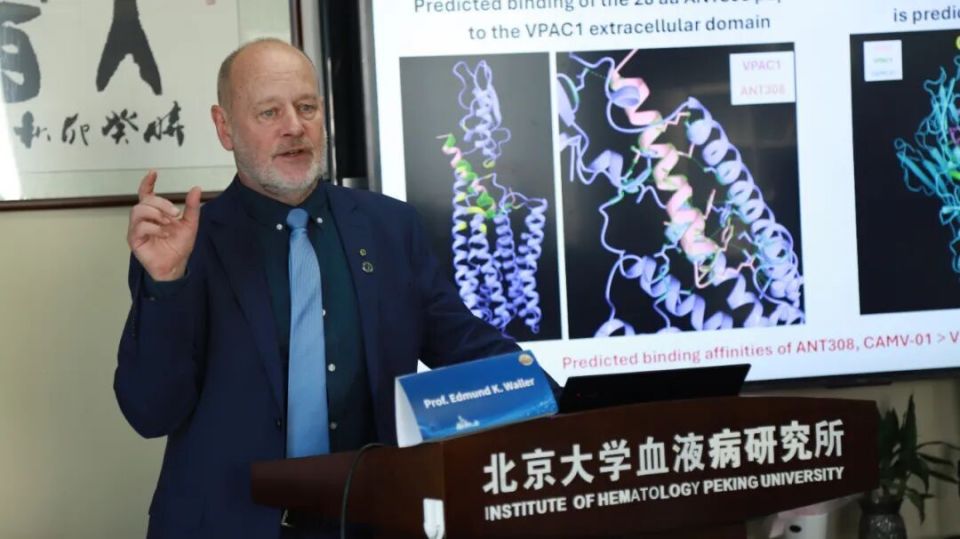
Edmund K.Waller教授现场作报告
专家简介
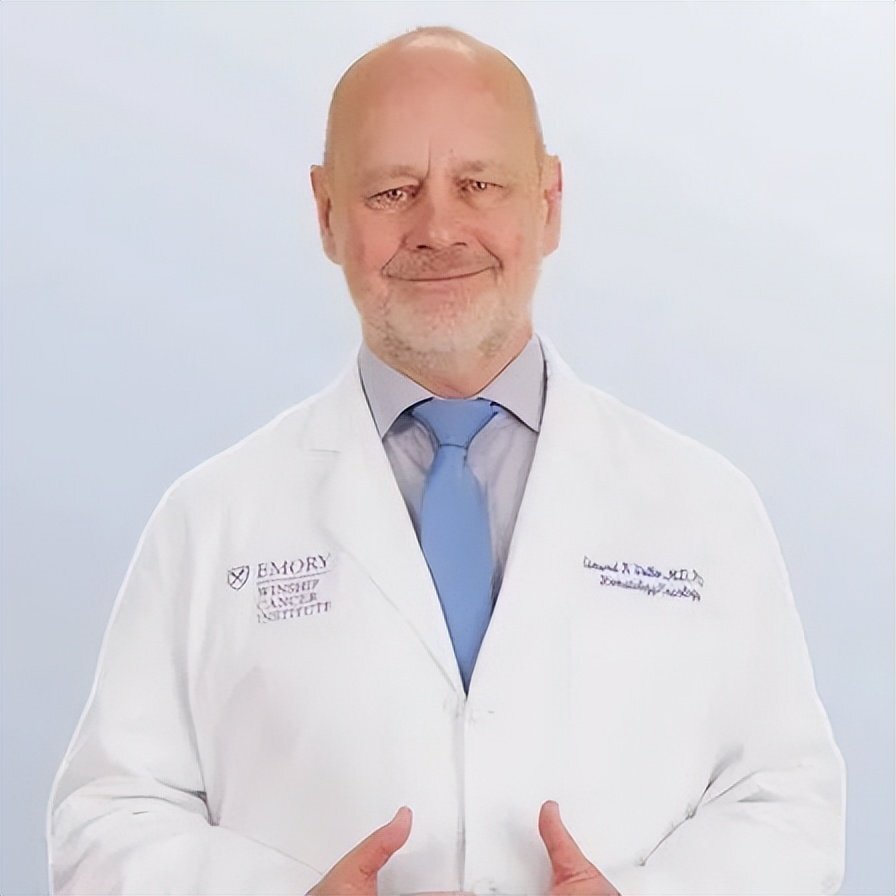
Edmund K.Waller 教授
美国埃默里大学医学院
温希姆Winship癌症研究所终身血液学和肿瘤学教授
埃默里大学医学院 医学教授、病理学教授
埃默里大学医院医学实验室主任
埃默里大学医院血液净化中心医疗主任
美国内科医师学会院士
美国科学促进会院士
美国临床肿瘤学会共同主席和摘要评审;美国血液学会摘要审查员
1974年获评 美国国家优秀学者 1978年 美国内科医师学会院士; 1998年 斯坦福大学医学院最佳临床教师 2014年获得埃默里大学技术许可交易奖,2011-2025年连续15年被评为Castle connollyMedical Ltd最佳医生和癌症最佳医生奖:2015-2024连续10年被评为亚特兰大杂志的顶尖医生2018年获得温希姆癌症研究所杰出导师奖;美国国家发明学院研究员。