编者按:由中国医疗保健国际交流促进会血液学分会主办,北京大学人民医院血液病研究所承办的2025北京国际造血干细胞移植学术会议于2025年4月25-26日在北京正式举办。本次会议将“移植的艺术(ART OF TRANSPLANT)”为主题,汇集全球领先的血液学专家,探索造血干细胞移植的技术创新和未来趋势,着力破解基础研究向临床应用转化的关键技术瓶颈,为血液系统疾病治疗开辟新维度。《肿瘤瞭望-血液时讯》现场特邀Banner MD Anderson癌症中心Rajneesh Nath教授,就美国单倍体相合造血干细胞移植技术的发展历程、临床实践优化以及未来展望等话题进行深度解读。
《肿瘤瞭望-血液时讯》请您概述一下目前单倍体相合造血干细胞移植(haplo-SCT)在美国的应用趋势?与过去相比,应用率有怎样的变化,其在造血干细胞移植中的占比如何?
Rajneesh Nath:单倍体相合造血干细胞移植技术自20世纪80年代末至90年代初即在美国开展临床探索,但早期受限于疗效不佳及操作复杂性未能广泛推广。直至2008年前后,约翰·霍普金斯大学与弗雷德·哈钦森癌症研究中心率先公布了采用非清髓性预处理方案联合移植后环磷酰胺进行移植物抗宿主病(GVHD)预防的初期临床研究结果,其显著疗效推动该技术在美国的快速发展。
目前,美国四分之一的造血干细胞移植手术已将单倍体相合供者纳入初始治疗方案,这主要得益于非清髓性预处理方案的标准化应用。尽管初始阶段存在植入失败率高和疾病复发率高等挑战,但通过供体来源从骨髓向外周血干细胞的转换以及预处理化疗方案的强化,部分技术瓶颈已获突破。
值得注意的是,外周血干细胞的应用虽改善了植入效能,却伴随GVHD发生率的升高,促使当前临床策略聚焦于维持抗白血病效应的同时优化GVHD防控体系。现阶段,单倍体相合移植领域正经历技术革新,众多临床试验相继开展,早期数据展现出令人鼓舞的应用前景。随着这些创新技术的成熟及长期随访数据的验证,单倍体相合移植有望进一步巩固其在造血细胞治疗领域的核心地位。
Oncology Frontier-Hematology Frontier:Could you please give us an overview of the current application trend of haploidentical hematopoietic stem cell transplantation (haplo-SCT) in the USA? Compared with the past, how has the application rate changed and what is its proportion in hematopoietic stem cell transplantation?
Rajneesh Nath:Haploidentical stem cell transplants have been tried in the United States since the late 1980s and early 1990s. However, in the past, the results were not that good, and the procedures were complicated. Around 2008, Johns Hopkins and Fred Hutch give their initial results of non-myeloablative conditioning followed by post-transplant cyclophosphamide for graft-versus-host disease (GVHD) prophylaxis, which showed some really promising results. After that, haploidentical transplants really took over in the United States.
Now, one-quarter of all transplants in the United States use haploidentical donors in the initial regimen. Because the conditioning was initially non-myeloablative, there was a lot of graft failure and disease relapse. But since then, several changes have been made: we have moved from bone marrow as the donor source to peripheral blood, and we have intensified the conditioning chemotherapy. This has taken some of these problems but created new problems—when we moved to peripheral blood, we started seeing more graft-versus-host disease. Now we are implementing strategies to reduce graft-versus-host disease.
It is an interesting time for haploidentical transplants. There are also some new platforms have been developed, which are still in clinical trials, with really promising results.I think over time, once the data are validated, it will be really interesting and exciting.
《肿瘤瞭望-血液时讯》在haplo-SCT技术方面,美国目前有哪些新的进展和突破?特别是在预处理方案上,有哪些优化的措施,以提高移植的成功率和降低并发症的发生率?
Rajneesh Nath:如前文所述,为了降低移植失败或不良移植功能的风险,供体来源已逐渐从骨髓转向外周血。然而,随着外周血的应用,我们观察到GVHD的发生率有所上升。多项研究已经着手致力于缓解这一问题,通过调整方案——包括转换、添加或优化步骤——来减少GVHD的发生。在欧洲及美国部分中心,另一种被采用的方法是在GVHD预防方案中添加抗胸腺细胞球蛋白(ATG)。具体而言,在我们中心,我们采用的是在移植后第5天,在完成清髓性预处理方案中的两剂环磷酰胺给药后,立即使用低剂量ATG与移植后环磷酰胺联合的方案。
Oncology Frontier-Hematology Frontier:In terms of haplo-SCT technology, what are the new progresses and breakthroughs in the USA? Especially in the preconditioning regimen, what are the optimized measures to improve the success rate of transplantation and reduce the incidence of complications?
Rajneesh Nath:As I mentioned earlier in the previous section, to reduce graft failure or poor graft function, the donor source has shifted from bone marrow to peripheral blood. However, with the transition to peripheral blood, we started seeing more graft-versus-host disease (GVHD). Several studies have aimed to mitigate this issue. Clinicians have adjusted the regimen—switching, adding, or optimizing steps—to decrease GVHD. Another method utilized in Europe and at several U.S. centers is adding anti-thymocyte globulin (ATG) to the GVHD prophylaxis protocol.In other words, at our center, we combine post-transplant cyclophosphamide with low-dose ATG administered on day +5 (five days after transplant), immediately after the two doses of cyclophosphamide at the myeloablative level.
《肿瘤瞭望-血液时讯》在美国医疗体系中,当患者缺乏全相合供者时,临床医生更倾向于优先选择haplo-SCT还是脐带血移植(UCBT)或无关供者移植(MUD)?决策时最关注的核心因素有哪些?
Rajneesh Nath:针对供者选择策略的临床演变,传统治疗路径以HLA全相合同胞供者为首选,若无匹配供者则转向无关供者移植。然而,无关供者配型及动员周期耗时较长,部分进展期患者因疾病紧迫性无法耐受等待期,促使单倍体相合造血干细胞移植逐步演变为重要的替代治疗方案。值得注意的是,在率先建立单倍体移植技术体系的移植中心,其临床应用优先级已超越传统无关供者移植模式。
尽管美国境内脐带血移植的总体开展频率呈下降趋势,但特定学术中心仍保留其适应证:主要用于高危血液肿瘤患者或移植时存在微小残留病灶(MRD)的病例,旨在利用脐带血独特的免疫调节特性改善预后。当前临床实践中,单倍体相合移植的实施频次已显著超越脐带血移植,成为非血缘供者体系外最具活力的移植技术分支,其快速发展既反映了移植免疫学领域的理念革新,也体现了精准医疗时代对供者可及性与疗效平衡的持续探索。
Oncology Frontier-Hematology Frontier:In the U.S. healthcare system, when a patient lacks a fully matched donor, do clinicians tend to prioritize haplo-SCT over umbilical cord blood transplantation (UCBT) or matched unrelated donor (MUD) transplants? What core factors are most critical in this decision-making process?
Rajneesh Nath:That's a very good question. Traditionally, if there was no matched sibling donor, an unrelated donor would be the first donor source to consider. However, procuring an unrelated donor takes time, and sometimes patients don’t have time to wait due to their disease status. Because of this, haploidentical transplants are becoming the second-line therapy, and in several centers, they are being prioritized over unrelated donor transplants—especially in centers that pioneered their use. Regarding the question about cord blood transplants, their use in the United States has decreased. But there are still centers that preferentially use cord blood transplants, especially in patients with high-risk diseases or those who have minimal residual disease at the time of transplant. Overall, haploidentical transplants are performed far more frequently than cord blood transplants.
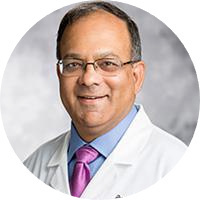
Rajneesh Nath教授
Banner MD Anderson癌症中心
细胞治疗/干细胞移植与白血病科主任
专注于血液系统恶性肿瘤、细胞治疗和干细胞移植。专业领域包括CAR-T 疗法,并参与了该领域的多项新临床试验。其他重点领域包括干细胞移植和老年急性白血病的治疗。