由瑞士肿瘤研究所基金会(IOR)主办的第18届国际恶性淋巴瘤会议(18-ICML)于2025年6月17日至21日在瑞士卢加诺盛大召开。作为全球血液肿瘤领域两年一度的顶级学术盛会,本届会议吸引了来自全球的千余名血液学家、临床肿瘤学家、放射肿瘤学家及基础研究学者齐聚一堂,围绕淋巴瘤疾病机制、转化医学进展及临床诊疗革新展开深度探讨。在会议中,MD安德森癌症中心Bouthaina S. Dabaja教授以“MD安德森经验更新——血液肿瘤放射治疗新前沿:增强系统治疗效应”为题进行专题汇报,系统阐述了血液肿瘤放疗策略的迭代与创新。《肿瘤瞭望-血液时讯》现场特邀Bouthaina S. Dabaja教授接受深度专访,聚焦放射治疗在CAR-T细胞疗法桥接治疗中的应用原则、剂量优化策略及免疫协同机制,分享从临床实践到基础研究的突破性进展,为血液肿瘤精准治疗提供新的思路与方向。
在过继性细胞治疗的临床实践中,放射治疗的应用策略与机制研究已成为当前肿瘤学领域的重要研究方向。基于MD安德森癌症中心五年来的临床实践经验,Bouthaina S. Dabaja教授系统阐述了放射治疗在CAR-T细胞疗法桥接治疗中的应用原则、剂量优化及毒性管理策略,并展望其与免疫治疗协同发展的前沿方向。
首先,最重要的是明确放射治疗的应用指征与靶区确定原则。MD安德森癌症中心自采用CAR-T细胞疗法以来,已在弥漫大B细胞淋巴瘤、滤泡性淋巴瘤、套细胞淋巴瘤、多发性骨髓瘤及白血病(最具前景的领域)的放射桥接治疗中积累了五年以上临床经验。当前多项前瞻性研究正同步开展,这些研究不仅关注临床结局,同时探索生物标志物及T细胞表型变化,重点评估拟接受桥接放疗的弥漫大B细胞淋巴瘤、滤泡性淋巴瘤及骨髓瘤患者中放射治疗的生物学效应。
血液系统恶性肿瘤对放射线具有高度敏感性,此特性显著区别于实体瘤的根治性放疗,因此需采用相对低剂量方案。该策略基于双重机制:其一,放射治疗除直接杀伤作用外兼具免疫启动效应;其二,可利用辐射诱导的免疫原性细胞死亡增强治疗效果。关于照射野设计,早期临床实践通常采用局部小野照射(从累及野到累及部位放疗),但MD安德森癌症中心、莫菲特癌症中心及纪念斯隆-凯特琳癌症中心的联合数据表明,扩大照射范围可改善临床结局。为平衡疗效与安全性,扩大照射野时必须相应降低剂量以规避毒性反应。
在毒性管理方面,由于放疗主要发挥免疫启动作用而非直接杀伤,即使采用大范围照射,低剂量方案也未出现限制性毒性或影响CAR-T细胞治疗疗效的情况。实施过程中需重点规避和保护骨髓区,因对于既往接受多线化疗、免疫治疗、骨髓受累的患者,大范围照射可能加重全血细胞减少风险。目前,临床实践中常采用剂量分层策略:大体积病灶给予较高剂量(20-30Gy);微小播散病灶则采用超低剂量(<5Gy)照射,仅发挥免疫启动作用而非根治性治疗。近期研究证实,该策略不会加剧细胞因子释放综合征或神经毒性,Cell期刊最新研究亦表明2Gy低剂量全身照射未引发脱靶效应,其作用机制与放疗联合化疗、免疫治疗的协同效应一致。综上,大范围低剂量放疗可作为安全有效的CAR-T桥接治疗手段,通过骨髓保护策略及多中心研究验证,未增加毒副作用。
谈到该领域最具突破性的进展,Bouthaina S. Dabaja教授指出源于相关临床前研究:在白血病和淋巴瘤小鼠模型中,2Gy全身照射可显著改善CAR-T细胞体内存续、增强其增殖能力,并提升抗肿瘤疗效,即使联合低剂量CAR-T细胞治疗仍可获得理想结局。这与MD安德森癌症中心提出的"大范围照射+低剂量"策略完全吻合,且2Gy剂量在异基因造血干细胞移植领域已安全应用数十年。基于此,MD安德森癌症中心即将启动随机对照试验,在急性淋巴细胞白血病患者中比较CAR-T细胞治疗前给予2Gy全身照射与未照射组的生物标志物,包括细胞因子、趋化因子、T细胞表型差异等。
此外,鉴于CAR-T细胞可穿透血脑屏障,且血液肿瘤中枢神经系统浸润发生率随疗效提升而增加,未来计划将颅脑脊髓照射(CSI)引入CAR-T细胞治疗体系,特别是针对CNS白血病患者。该方案的理论基础源于既往移植前CSI预防CNS白血病复发的成功经验,现拟通过随机对照研究比较CSI组与非照射组的血液及脑脊液免疫指标变化。
展望未来,放射治疗应突破传统认知,不再被视为单纯杀伤性手段或姑息治疗选择,而是作为免疫调节策略,与CAR-T细胞治疗、免疫检查点抑制剂等药物产生协同效应。同时,现代计算机辅助治疗计划系统可实现精准照射,在保护心、肺、乳腺、肠道等正常组织的同时,完成靶区剂量覆盖。这种技术革新使放疗真正成为"新型药物",其应用场景已从巩固治疗扩展至与系统治疗的联合。最终,随着异体CAR-T细胞、CAR-NK细胞疗法等新型治疗手段的发展,低毒性放疗将在桥接治疗中发挥关键作用,特别是对于既往化疗耐药患者,放疗可作为安全有效的桥接手段,推动过继性细胞治疗向更早期治疗阶段延伸。
I will go today through multiple questions that are very common for the clinical practice of radiation in the adoptive cell therapy. The first question that comes to everybody's mind is how do we use radiation and how do you do we determine where to use it. And in our clinical practice at MD Anderson we have now had over five years of experience since the adoption of CAR-T cell therapy in treating and bridging with radiation for diffuse large B-cell lymphoma, follicular lymphoma, mantle cell lymphoma, myeloma and the most exciting one is in leukemia. So, starting first with the protocols that are ongoing right now. we have multiple prospective protocols some of them are industry funded and we're trying to study not only the clinical outcome but also the biomarkers the T-cell phenotype on how radiation is affecting patients who are being considered for bridging radiation prior to diffuse large B-cell lymphoma, follicular lymphoma and myeloma. To that end it is important to understand that hematological malignancies are actually very sensitive to radiation. So as opposed to when we treated definitively or as opposed to solid tumors whenever we use radiation it has to be a relatively low dose. And that comes from two facts. The first one is radiation is in addition to the killing factor it has a priming factor. And the second fact is that we use the immunogenic cell death here to help us with radiation. As for choosing the field originally we always wanted to start with the local field and a small field because we went from involved-field to involved-site radiation therapy. But then with some data that emerged from both MD Anderson, Moffitt, Memorial Sloan Kettering we actually noticed that a more comprehensive field of radiation would get a better outcome. Therefore to accommodate the more comprehensive field then we needed to accommodate a lower dose because we do not want to end up with side effects. There was another question that I was asked how do we deal with side effects and what are the toxicities that are expected. Since we are doing priming and we are trying to go after the exhausted immune system then when we give radiation with a lower dose even if it is comprehensive we did not actually experience toxicities that one, would limit the dose of radiation or would decrease the outcome of those CAR-T cell patients. And also to that end when we give the radiation we try as much as we can to avoid the bone marrow because you want to make sure not to cause pancytopenia since the marrow that we treat often have been through so many chemotherapy, so many immunotherapy and the disease itself which can cause pancytopenia. So our first priority when we're giving a comprehensive field is not to avoid the marrow. Now the dose quite often is a differential dose. For example if I have a bulky area then I would go with a relatively high dose but never more than 30 Gy. Even 20 Gy is enough. And if I have a small dose that is a satellite lesion in many other areas then I would go with an ultra-low dose to that area because I'm only using the priming of that area rather than definitively treated with radiation. There are studies also that came recently about the toxicity that we observe with radiation and they were all reassuring that we do not necessarily contribute to a higher cytokine release syndrome and we do not contribute to more neurological symptoms. As a matter of fact a Cell paper that just came recently did prove that when you use radiation it does not have an off-target off-tumor side effects. Therefore, it is as the same mechanism that you would observe it with both radiation, chemotherapy, immunotherapy and radiation. So in conclusion for the toxicity it is a safe bridging because the fields although they might be comprehensive but the dose is relatively low. We avoid the marrow and we know now from multiple studies that we are not contributing to a higher cytokine release or to a higher neurological symptoms.
The last and most exciting part that we are working on right now and you will see emerging data about actually comes from preclinical models. In these preclinical models they did show that for example, if you use a total body irradiation but only to 2 Gy in mouse models both a leukemia or a lymphoma mouse model we did see that these mice when they received the 2 Gy of total body irradiation ended up with a better fitness of the CAR-T cell, a more expansion of the CAR-T cells and actually a better outcome for the tumors even if a lower dose of CAR-T was used with the radiation. That came to the same conclusion that we discussed right now which is it is more comprehensive field, it is a lower dose and the 2 Gy total body irradiation is a very safe way or a technique that has been used in allogeneic stem cell transplant for two or three decades right now with a very higher rate of safety. So the first application that is going to come to this is to try at MD Anderson to run a randomized trial where we give 2 Gy of total body irradiation for leukemia patients prior to CAR-T, particularly ALL which is acute lymphoblastic leukemia. where we are going to compare the biomarkers, cytokines, chemokines, T-cell phenotype comparing two groups. The one that received total body irradiation prior to cell therapy and the one that did not. To that end, also since we know now that CAR-T can traffic into the central nervous system which is again a very exciting finding and since more and more in hematological malignancies we do see that there is involvement of the central nervous system. You see it in leukemia patients because they're living longer even with a marrow negativity. You see it in myeloma patients because now we improved the survival of these patients of almost a decade. We also see it in lymphoma patients. So because the CAR T-cell would traffic and because we already proved that radiation synergistically would work with CAR T-cell to relieve the exhaustion to increase the CD cytotoxic T cells and decrease the T regulatory cells then we thought that from now on we're going to start applying a craniospinal irradiation for patients who are undergoing CAR T-cell therapy specifically if they have CNS leukemia. The potential benefit of that is that it could be applied for any other disease including lymphoma and myeloma to use craniospinal irradiation. Where did we get the data from? We already published our data for the benefit of craniospinal irradiation prior to all patients that would receive transplant if they have CNS leukemia or they have a high risk for CNS leukemia when they are undergoing transplant. So we wanted to transfer that same knowledge that is published to the CAR T-cell world where we would also do a randomized study where we compare patients who received CSI which is craniospinal irradiation to patients who did not. And then collect blood and CSF and compare it at different time points. So where I think the field is going is radiation should not be looked at anymore as a killing mechanism where it is associated with toxicity. But rather as a priming mechanism where it could help with the exhaustion of the CAR T-cell therapy that has been showing that not all the patients will be in remission and many of them would fail. That priming mechanism is should be very safe because we're using a lower dose. And we are very careful on how to apply the radiation. And with the modern technology that we have right now with the computer-assisted treatment planning you will be able to deliver the treatment to the area in need without any excess dose of radiation to the heart, lungs, breast, bowels and you name it. And that was the promise of the modern technology radiation therapy. But the other promise is radiation is really acting as a new drug right now. In the past we always used to give it either as a consolidation or if we are at the end of the road telling the patient there is nothing else we can do we're going to give you radiation and that's it. At this point there is a super promising role for radiation as hand in hand with not only CAR T-cell therapy but also with immunotherapy because many synergistic effects happens with immunotherapy like BTKi, or venetoclax, or azacitidine, or cyclophosphamide, or Brentuximab. You could see that there is an amazing synergism between the two. So the future is truly going to hold radiation in that sense. The last thing that we hope to work on is in the future in addition to autologous CAR T-cell they will be allogeneic CAR T-cells, they will be NK cell infusions and radiation therapy would work perfectly with these since we all know right now that biggest problem for autologous CAR T-cell is the inability to collect if patients are heavily pre-treated. And since everybody is moving to treat with CAR-T at an earlier stage when the patients are not already exhausted then radiation would come as a very handy non-toxic method to help us to bridge those patients safely to get the CAR T-cell and in the future we can move it to other form of adoptive cell therapy.
专家简介
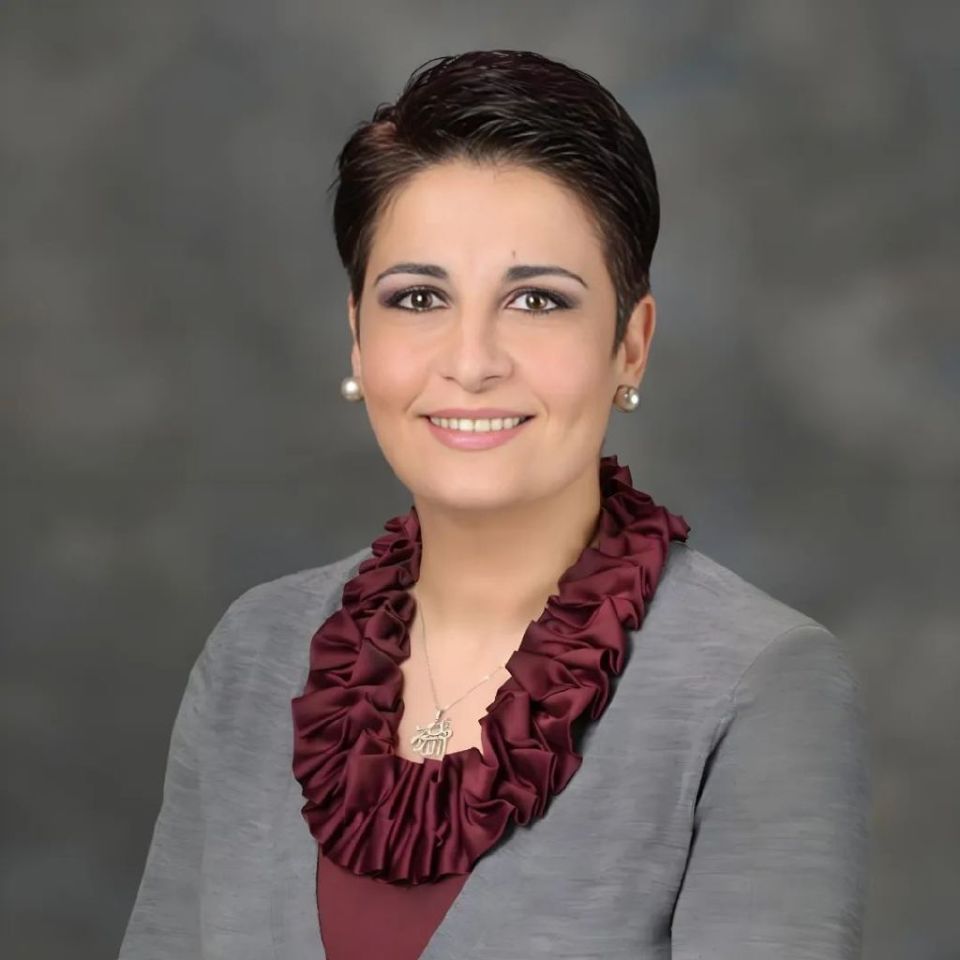
Bouthaina Dabaja教授
MD安德森癌症中心
于黎巴嫩大学获得医学博士学位,并在贝鲁特美国大学及德克萨斯大学MD安德森癌症中心完成临床住院医师规范化培训。
自2006年加入MD安德森癌症中心以来,她从助理教授逐步晋升为教授,现任放射肿瘤科血液学组主任。
其临床工作始终以患者为中心,在维持与提升淋巴瘤患者治愈率的同时,致力于减少治疗相关的急慢性毒副作用。长期聚焦纵隔淋巴瘤这一临床难题,主导开展多项临床试验,探索优化治疗方案,以期为淋巴瘤患者提供更优治疗选择,并最大限度降低纵隔淋巴瘤患者长期生存中的治疗相关后遗症。