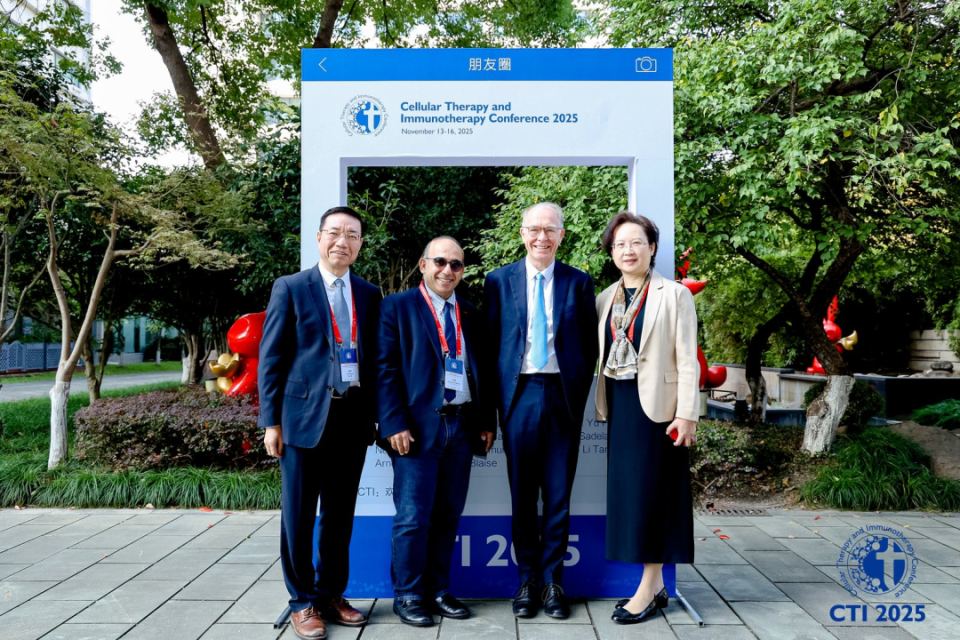
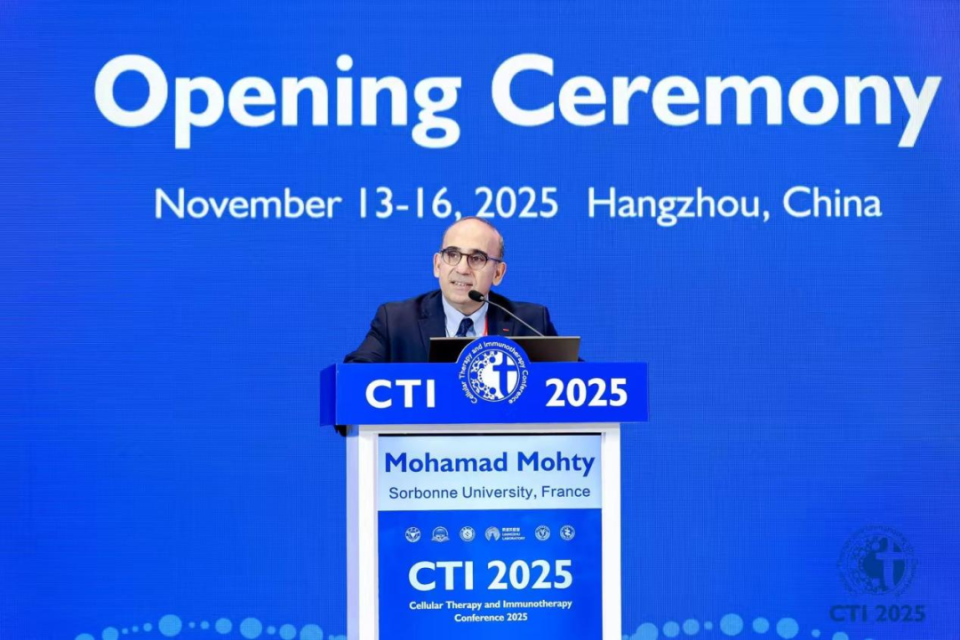
移植物抗宿主病(GVHD)仍是异基因造血干细胞移植后死亡的主要原因之一,其治疗策略亟待突破。近年来,肠道微生物群在免疫稳态中的关键作用被日益揭示,为GVHD的病理生理机制理解与干预带来了全新视角。2025年11月13-16日,2025国际细胞与免疫治疗大会(CTI 2025)在浙江杭州召开。会议期间,《肿瘤瞭望-血液时讯》特邀大会主席Mohamad Mohty教授基于国际视野,从微生物群失调在GVHD中的核心机制、创新疗法MaaT013的临床证据以及该策略对移植乃至更广泛肿瘤治疗领域的深远影响等方面,系统阐述这一前沿领域的进展与展望。
Q1
肠道微生物群失调在血液学患者异基因造血干细胞移植中如何通过关键机制促进aGVHD发病,这如何指导当前的调节策略?
Mohamad Mohty教授:微生物群失调在急性移植物抗宿主病(GVHD)发病机制中的作用日益明确。现有证据表明,移植后患者肠道微生物群多样性下降(即生态失调)不仅显著参与急性GVHD的病理生理过程,亦可能与复发风险等移植后并发症相关。尽管当前证据多集中于相关性,因果关系尚待进一步阐明,但生态失调确实可导致某些细菌(如肠球菌)过度增殖,从而驱动肠道急性GVHD的发生与发展并加重其严重程度。此外,微生物群落结构影响丁酸盐等有益代谢物的分泌,而研究已证实患者总生存期与微生物群丰富度之间存在明确关联。
传统上,急性GVHD的治疗主要依赖于增强免疫抑制。与之不同,微生物群调节旨在通过提升微生物多样性,重建免疫系统与微生物群之间的动态平衡。具体而言,增加微生物丰富度有助于促进丁酸盐分泌、抑制炎症反应、清除多重耐药菌并抑制条件致病菌生长,从而恢复肠道物理完整性,为管理这一移植后主要并发症提供了新思路。
what are the key mechanisms by which microbiota dysbiosis contributes to aGVHD pathogenesis in hematology patients undergoing allogeneic hematopoietic stem cell transplantation, and how does this inform current modulation strategies?
The role of microbiota dysbiosis in the pathogenesis of acute Graft-versus-Host Disease (aGVHD) is increasingly defined. Accumulating evidence indicates that decreased gut microbiota diversity (i.e., dysbiosis) in patients post-transplant is not only significantly involved in the pathophysiology of aGVHD but may also be associated with post-transplant complications such as relapse risk . Although current evidence often highlights correlation rather than fully elucidated causality, dysbiosis can indeed lead to the overgrowth of certain bacteria (e.g., Enterococcus), thereby driving the initiation, progression, and severity of intestinal aGVHD . Furthermore, the structure of the microbial community influences the secretion of beneficial metabolites like butyrate, and a clear association has been demonstrated between overall patient survival and microbiota richness.
Conventionally, aGVHD treatment primarily relies on intensified immunosuppression. In contrast, microbiota modulation aims to reestablish a dynamic balance between the immune system and the microbiota by enhancing microbial diversity . Specifically, increasing microbial richness helps promote butyrate secretion, suppress inflammatory responses, clear multidrug-resistant organisms, and inhibit the growth of opportunistic pathogens, thereby restoring intestinal physical integrity and offering novel strategies for managing this major post-transplant complication.
Q2
像MaaT013这样的微生物群调制如何在管理类固醇耐药病例中显示潜力,您对其纳入标准血液学治疗策略的前景有何看法?
Mohamad Mohty教授:近年来,随着微生物群多样性——特别是菌群失调——在急性移植物抗宿主病发生机制中的作用日益明确,我们开发出一款名为MaaT013的微生物群制剂。该产品源自多位健康供体,属于异体来源,但其独特之处在于构建了一个完整的微生物生态系统。我们通过汇集不同健康供体的粪便物质,制备出稳定性高、均一性好、物种丰富度突出的微生物群产品,以用于粪便微生物群移植(FMT),即粪便微生物疗法。
目前已有的Ⅰ/Ⅱ期临床试验结果已正式发表,概念验证数据表明,使用MaaT013有助于在重症急性GVHD患者中实现总体缓解及完全缓解,并可进一步改善患者生存。此外,一项覆盖欧洲范围的大规模早期用药计划结果显示,该方案在对类固醇耐药及芦可替尼耐药的急性GVHD患者中,胃肠道症状缓解率和总体缓解率均超过60%。由于患者生存期得以延长,且不良反应可控、程度较轻,该疗法显示出明确的临床获益。
总体而言,基于全生态系统制剂MaaT013的粪便微生物群移植策略,已在重症胃肠道急性GVHD的治疗中展现出显著疗效。
how has microbiota modulation with products like MaaT013 demonstrated potential in managing steroid-refractory cases, and what perspectives do you hold for its integration into standard hematology protocols?
In recent years, as the role of microbial diversity—particularly dysbiosis—in the pathogenesis of acute graft-versus-host disease (aGvHD) has become increasingly clear, a microbial-based product named MaaT013 has been developed. This product is allogeneic in origin, derived from multiple healthy donors, and is unique in that it constitutes a complete microbial ecosystem. By pooling fecal matter from various healthy donors, a highly stable, homogeneous, and species-rich microbiota product is produced for use in fecal microbiota transplantation (FMT), referred to as fecal microbiotherapy.
Results from completed phase I/II clinical trials have been formally published. Proof-of-concept data indicate that the use of MaaT013 can contribute to achieving overall and complete responses in patients with severe aGvHD, subsequently improving patient survival . Furthermore, results from a large-scale Early Access Program across Europe showed that this approach led to gastrointestinal symptom response rates and overall response rates exceeding 60% in patients with steroid-resistant and ruxolitinib-resistant aGvHD . This treatment has demonstrated clear clinical benefit, driven by improved patient survival and a manageable safety profile with predominantly mild adverse events .
In summary, the FMT strategy based on the full-ecosystem product MaaT013 has shown significant efficacy in treating severe gastrointestinal aGvHD .
Q3
为更好平衡移植后移植物抗宿主和移植物抗白血病效应,您对血液学中靶向微生物群干预的治疗前景有何展望?
Mohamad Mohty教授:微生物群调节的作用不仅限于作为肠道急性移植物抗宿主病的有效治疗方法,它还可能对异基因造血干细胞移植的整体预后产生积极影响。其价值首先体现在对急性GVHD的控制——这一点至关重要,同时它也有助于降低包括多重耐药菌感染在内的移植相关并发症风险。现有数据还提示,微生物群调节可能对降低疾病复发风险具有一定作用。例如,布劳特氏菌等有益菌群的富集,实际上有助于增强免疫介导的移植物抗白血病效应。
由此可见,恢复微生物群多样性无疑可为移植结局带来多方面的获益。不仅如此,在异基因移植领域之外,微生物群的调节与多样性恢复也有望与CAR-T细胞治疗协同发挥作用,还可与T细胞衔接器、双特异性抗体等其他免疫疗法联合应用,即便在不进行移植的场景下也具有潜力。
总体来看,微生物群调节策略不仅有望成为血液系统恶性肿瘤的重要治疗支柱,也可能在未来更广泛的肿瘤治疗领域占据关键地位。
What future perspectives do you envision for targeted microbiota interventions in hematology to balance graft-versus-host and graft-versus-leukemia effects post-transplant?
Microbiota modulation extends beyond serving as an effective treatment for intestinal acute graft-versus-host disease (GVHD) and may positively influence the overall prognosis of allogeneic hematopoietic stem cell transplantation (allo-HSCT). Its value is demonstrated primarily in controlling acute GVHD—a critical aspect—while also contributing to a reduced risk of transplant-related complications, including infections with multidrug-resistant organisms . Existing data also suggest that microbiota modulation may play a role in mitigating the risk of disease relapse . For instance, the enrichment of beneficial bacterial taxa, such as Blautia, can actually help enhance the immune-mediated graft-versus-leukemia effect .
Consequently, restoring microbial diversity undoubtedly offers multifaceted benefits for transplant outcomes. Furthermore, beyond the field of allogeneic transplantation, microbiota modulation and diversity restoration hold promise for synergistic application with CAR-T-cell therapy and can be combined with other immunotherapies, such as T-cell engagers and bispecific antibodies, demonstrating potential even in non-transplant settings .
In summary, microbiota modulation strategies are poised to become not only a significant therapeutic pillar in hematological malignancies but also occupy a crucial position in the broader landscape of future oncologic treatments.
专家简介

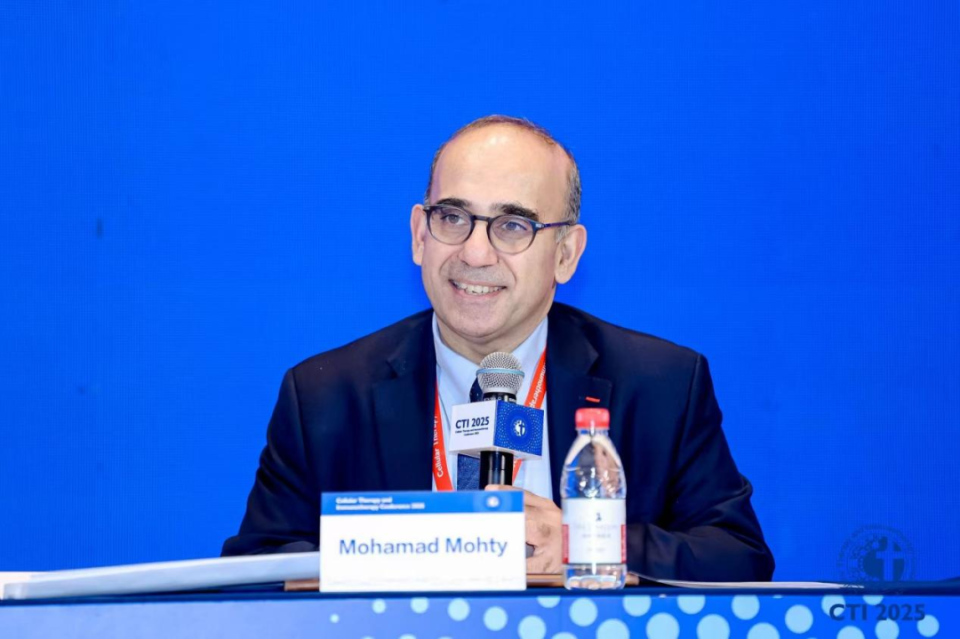
Mohamad Mohty教授
法国巴黎圣安托万医院和索邦大学
法国巴黎圣安托万医院和索邦大学血液学正教授兼血液学和细胞治疗部主任
欧洲血液和骨髓移植学会(EBMT)的前任主席
EBMT急性白血病工作组的前任主席
国际临床血液学学会(IACH)的创始人和现任主席
骨髓细胞法语协会(IFM)的执行董事会成员
法国国家医学院研究员
除了在干细胞移植、白血病和骨髓瘤领域发表 1000 多篇同行评审文章外,还担任《骨髓移植》和《国际临床血液学》杂志的主编,以及许多其他知名期刊的编辑、董事会成员和/或审稿人